You switched from potato chips to pumpkin seeds. You started pouring chia seeds onto your morning oatmeal. You feel incredibly healthy. But when you step on the scale a month later, you've somehow gained three pounds.
Welcome to the most common dietary trap on the planet. As a dietitian, I see this every single day: people assume that because a food is a "superfood," it must magically melt fat away. The harsh biological reality? Your body does not care how "healthy" or "organic" a handful of seeds is. If you eat a massive surplus of energy, your body stores that energy. And seeds are literally the most energy-dense foods nature produces.
Let's aggressively break down the math of "portion distortion" and why a single careless handful of seeds can completely silently sabotage your entire week of dieting.
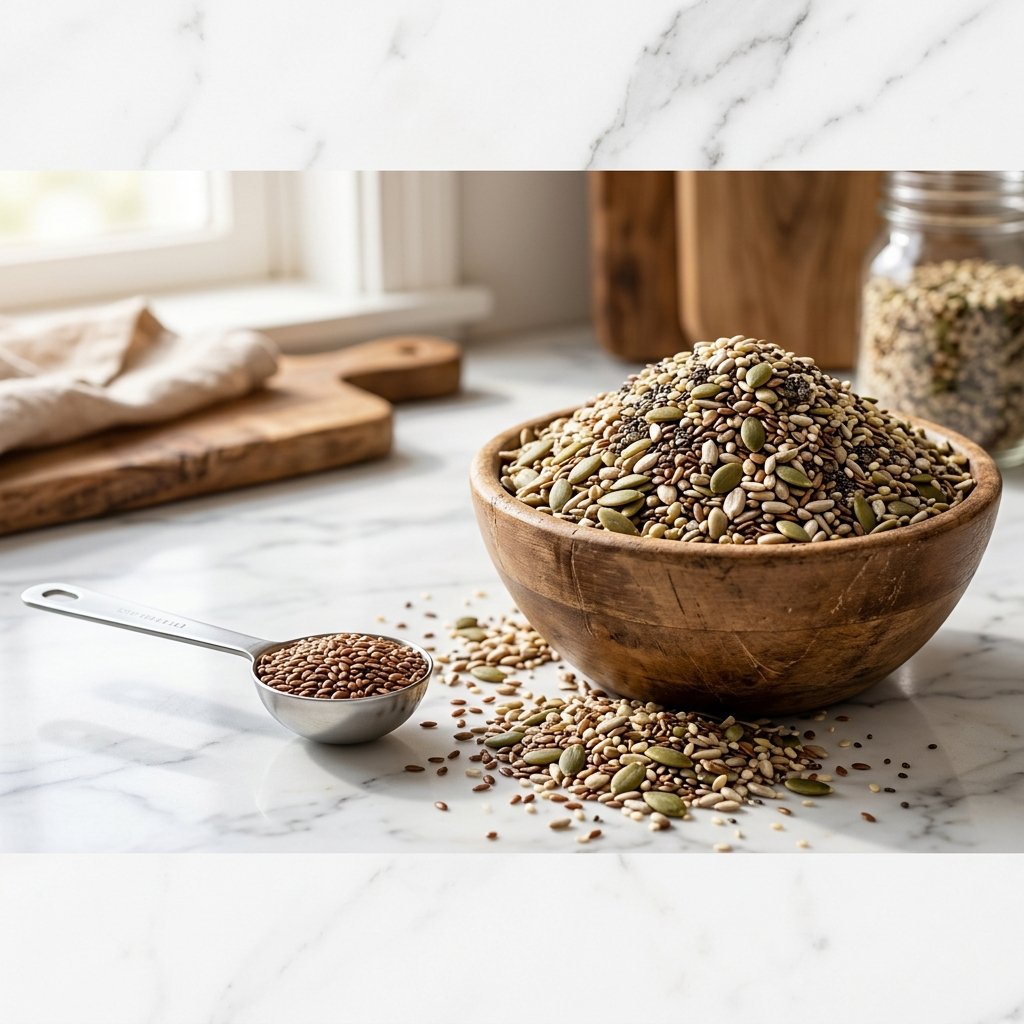
- Healthy Fats = Massive Calories: Seeds are composed almost entirely of fats. Fat contains 9 calories per gram, making seeds more than twice as calorically dense as pure sugar.
- The "Handful" Mistake: Most people wildly underestimate how many calories are in a casual handful of trail mix or pumpkin seeds. Just 1/2 cup can exceed 400 calories.
- Mandatory Tracking: If your goal is weight loss, you cannot afford to "eyeball" your seed intake. You must use exactly measured tablespoons or a digital food scale.
1. The Brutal Math of Healthy Fats
There are three macronutrients: carbohydrates, protein, and fats. Carbohydrates and protein contain 4 calories per gram. Fats contain 9 calories per gram. Because a seed is literally an entire plant compressed into a protective shell, it requires an immense source of energy to sprout into the soil. That energy is stored as fat.
Yes, these are "healthy fats" (like the Omega-3s in flax seeds or the Zinc-rich lipids in pumpkin seeds). They lower cholesterol, hydrate the skin, and stop hair shedding. But a calorie is still a calorie when it comes to thermodynamics. If your daily maintenance calories are 1,800, and you eat 2,500 calories of pure, healthy, organic plant fats, you will gain body fat.
2. Portion Distortion & The "Handful" Trap
The biggest trap modern dieters fall into is "snacking." If you leave a jar of dry-roasted pumpkin seeds on your office desk, you will likely reach into it five or six times a day without even registering it.
A true serving size of almost any seed is roughly 2 Tablespoons (or 1 ounce/28 grams). This standard serving usually sits right around 130 to 160 calories. However, a single "casual handful" grabbed by an adult man can easily equal half a cup, or 400 to 500 calories. If you do that twice a day, you have just eaten almost 1,000 extra calories while honestly believing you "didn't eat anything bad." This is why people plateau.
Using the Seed Calorie Calculator
Because every seed differs slightly in fat content, I built a massive, interactive database to crunch the numbers for you. Before you start dumping massive piles of hemp hearts into your breakfast smoothie, open our free Seed Calorie Calculator.
You can input your exact tablespoon or cup measurements and see immediately how many calories, grams of fat, and grams of protein you are about to consume. It is the single most powerful tool for ensuring you get the nutritional benefits of seeds without accidentally gaining weight.
3. How to Actually Eat Them Safely
The goal isn't to stop eating seeds—the goal is to respect them. They are nature's multivitamin, but you only need a single dose. Here is how I teach my clinical clients to manage their intake:
- The Daily Allotment: Only allow yourself exactly 2 tablespoons of seeds or nuts per day. Pick your favorite (pumpkin for zinc, chia for fiber, hemp for protein) and mix it into a larger, lower-calorie meal like a salad or oatmeal.
- Never Eat from the Bag: If you buy a massive bag of sunflower seeds, do not sit on the couch with the bag open. Pour 2 tablespoons into a small ramekin, put the bag back in the pantry, and enjoy your specific portion.
- The "Net Calorie" Fiber Defense: Here is some slightly good news. Seeds (specifically flax and chia) are so high in insoluble and soluble fiber that the body struggles to digest all the fat trapped inside the hard cellular walls. Some studies suggest that up to 20% of the calories in chia seeds pass completely through your colon unabsorbed. You still have to track them, but know that the massive hit of dietary fiber blunts the full caloric impact.
Frequently Asked Questions
Can I eat unlimited sunflower seeds if I spit the shells?
No. While baseball players often chew massive bags of sunflower seeds in the shell over hours without gaining weight, that is because the physical act of shelling them violently slows down your intake. It takes almost an hour to actually consume an ounce of kernels this way. However, if you buy pre-shelled "kernels," you can eat 500 calories in 90 seconds. The shells slow you down, but the kernel itself is still pure fat and calories.
Are "smoothie bowls" a hidden calorie bomb?
Absolutely. A trendy $14 acai bowl at a boutique cafe is often topped with chia seeds, hemp hearts, pumpkin seeds, granola, and peanut butter. While every single ingredient is technically "healthy," that combination of dense fats and sugars routinely pushes the meal past 1,200 calories. If you eat an acai bowl assuming it's a light 300-calorie diet snack, you are trapped in portion distortion.
What happens if I eat an entire cup of chia seeds?
Aside from ingesting roughly 800 calories in one sitting, eating a literal cup of chia seeds will cause massive, agonizing gastrointestinal distress. Chia seeds absorb 10 times their weight in water. If you dump a cup of dry chia into your stomach, they will pull water from your surrounding tissues, creating a massive, immovable blockage in your colon. They are a tool, not a meal. Stick to the 2 Tablespoon rule.

Ali is a Dietitian and Nutrition Researcher with over 5 years of experience. Content is based on clinical data and USDA guidelines to ensure evidence-based accuracy.